I came late to Pinot. I grew up in a family that drank Cabernet because it came in bottles with gold foil, and I found Burgundy in my early thirties in the way most people find it — through a wine bar and a patient somm and a night I could not really afford. For a decade after that I bought Pinot the way most of us buy Pinot: producer first, vintage second, vineyard if I was being careful. I thought I was doing it right. I was wrong in a way I could not see until I tasted five barrel samples of the same wine on a Tuesday night in Sonoma in March.
The setup
I joined a Russian River 2023 Crew because I had the money and my wife had stopped being impressed by Napa. The winemaker hosts a blend trial in person every spring. The rest of the Crew participates remotely, but she invites six or seven local members into the cellar for the physical tasting. I drove up on a Tuesday afternoon. Traffic was bad. I arrived twenty minutes late and she handed me a glass before I had taken my jacket off.
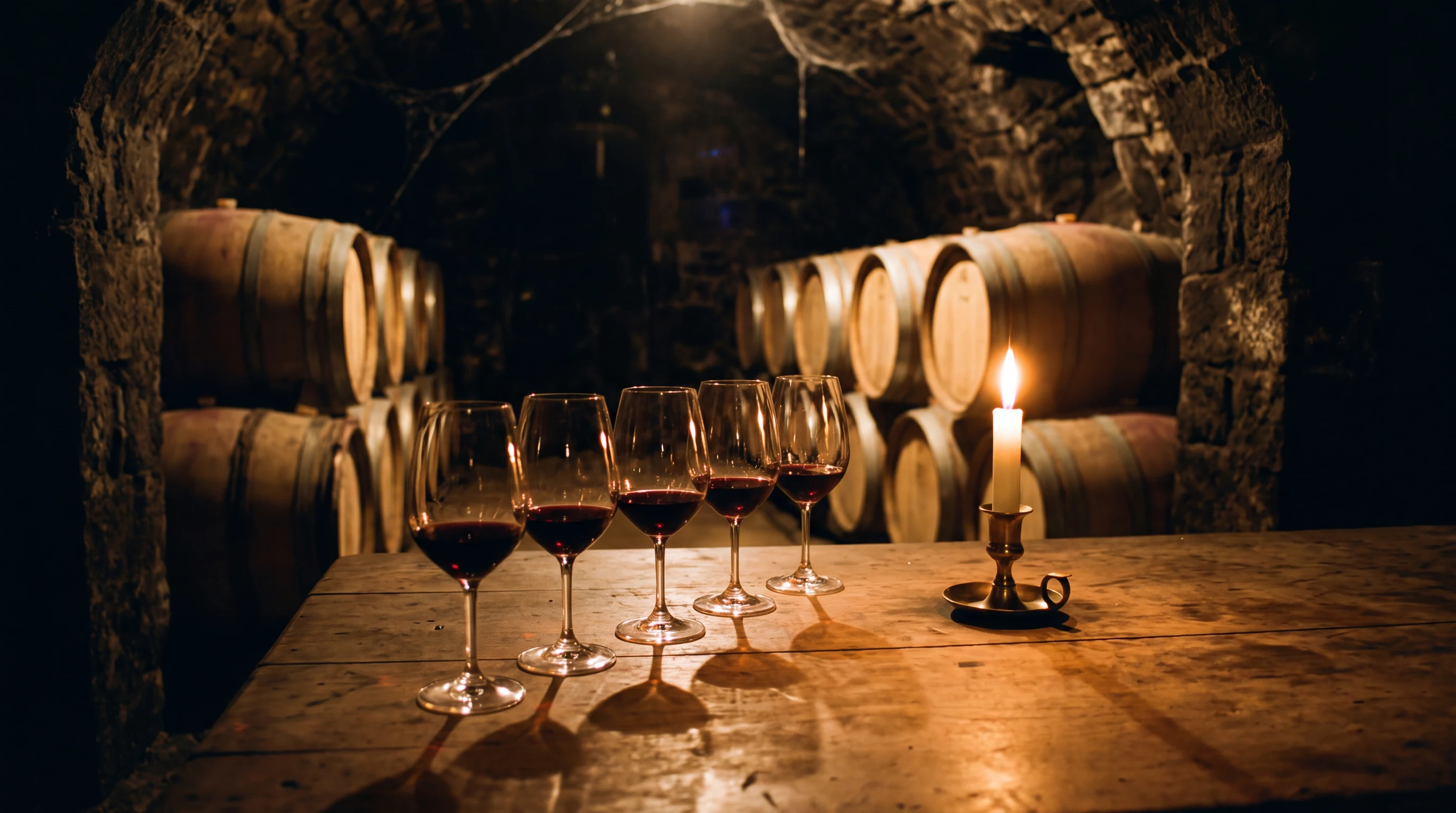
On the bench there were five unlabeled carafes. Five barrels of 2023 Pinot, same vineyard, same vintage, same winemaker. One was Pommard clone from the upper block. One was 777 from the lower block. One was 667 from a parcel that gets more fog. One was a whole-cluster ferment she had decided to try on a small lot. One was the estate blend she had drafted the week before and wanted us to react to.
What happened in the glass
The Pommard was dark-fruited, heavy, slightly flat on the finish. I wrote the word bass in my notebook. The 777 was higher and prettier, cherry pit and something like rose water, but thin in the middle. I wrote the word treble. The 667 was the one I would have bought in a store — classic Russian River, balanced, easy. I wrote good. The whole-cluster was strange. It smelled like a forest floor after rain and tasted like someone had squeezed a lemon over a bowl of cherries. I did not know what to do with it. The estate blend tasted, unsurprisingly, like all of them at once.
She asked us which blend we would vote for. She had drafted the estate at sixty percent 667, twenty-five percent 777, ten percent Pommard, five percent whole-cluster. She wanted to know whether to keep the whole-cluster at five percent or push it higher.
The moment I tasted the whole-cluster next to the Pommard, I understood what Pinot was supposed to do. I had been drinking it as flavor. It is structure.
The six of us argued for an hour. One Crew member, a former chef, wanted the whole-cluster at twelve percent. Another wanted it eliminated. I was the deciding vote in a group I had just met. I chose eight percent. She drafted a new blend on the back of a shipping label and pulled it for us to taste against the first. The new blend was better. Not in a subtle way. The whole-cluster at eight percent gave the wine a spine. Without it, the blend was pleasant. With it, the blend had a shape.
What I understood after
Every Pinot I had ever loved had structure. I had mistaken the structure for flavor, because the flavor is the thing you can describe. When people say a wine is great they usually say it tastes like something — cherry, pomegranate, rain-soaked earth — and they mean those words literally. What they are actually responding to is the way the acid and the tannin and the alcohol hold those flavors up. The flavors are the roof. The structure is the house.
Tasting five parts of the same wine separately made the structure impossible to ignore. The Pommard was the foundation. The 777 was the roof. The 667 was the walls. The whole-cluster was the thing that made the roof not fall down. I had been drinking finished wines for ten years and I had never seen a house without its walls.
The finished 2023 arrived in my house in October. It is not the best bottle I own. It is the bottle I understand best. I drink it slowly, one night at a time, and every time I pour it I think about the Pommard and the whole-cluster and the evening I learned the difference.
If you are considering a Crew — and that is what this essay probably is, underneath — the thing that changed was not my access to wine. I had plenty of access. The thing that changed was my ability to read what I was drinking. That cannot be bought in a bottle. It can only be learned in a cellar.
Written by
Split Vineyards
Published February 20, 2026