Every August we ship small amber bottles of green-grape juice to Crew members in eighteen countries. The bottles are about the size of a travel shampoo. The liquid inside is tart, green, and nothing like wine. Every year we get at least one email from a member who thinks it is defective. It is not. It is verjuice — older English spelling, from the French verjus, meaning green juice — and it is one of the most useful things you will ever drink.
What it is
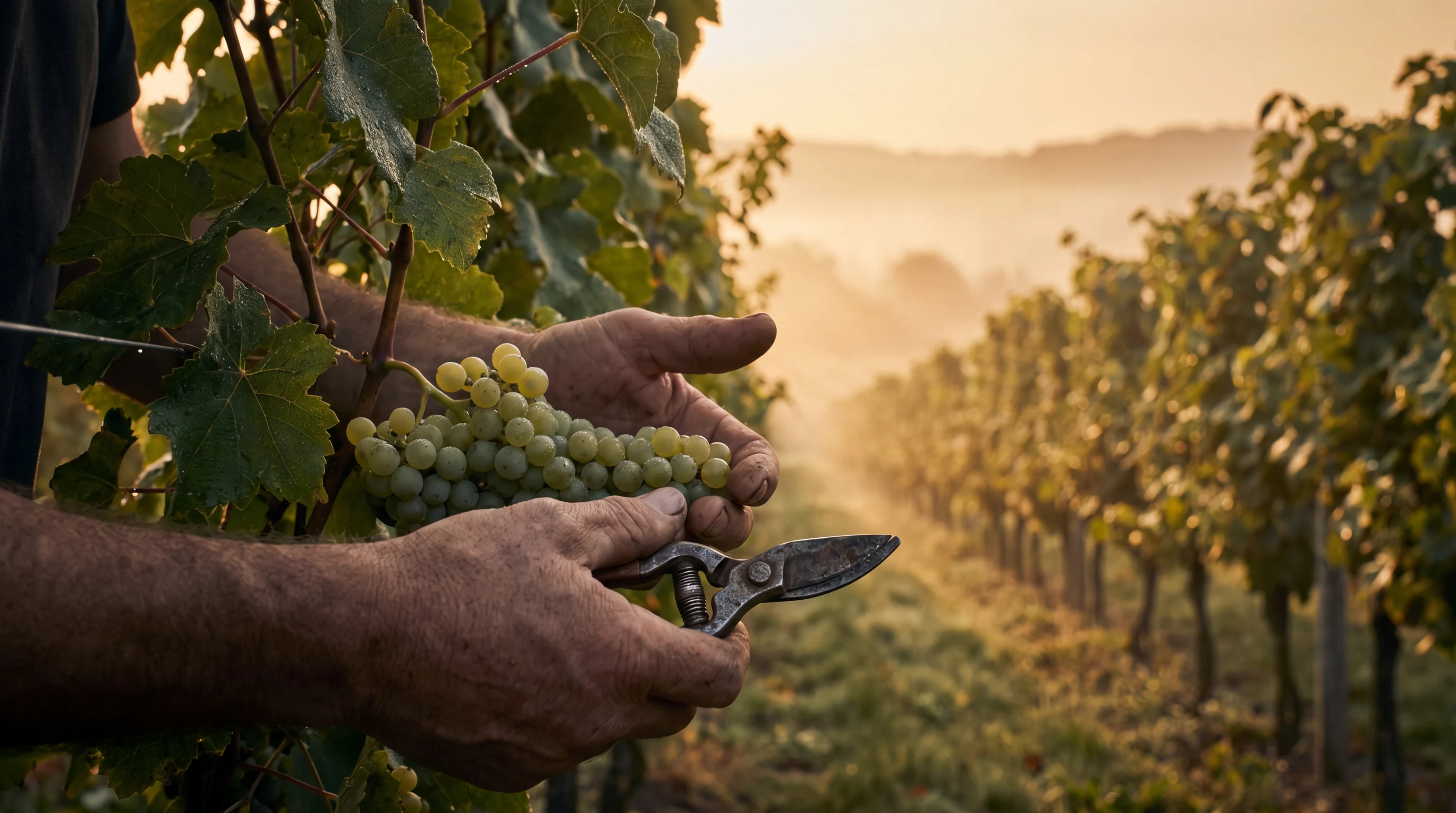
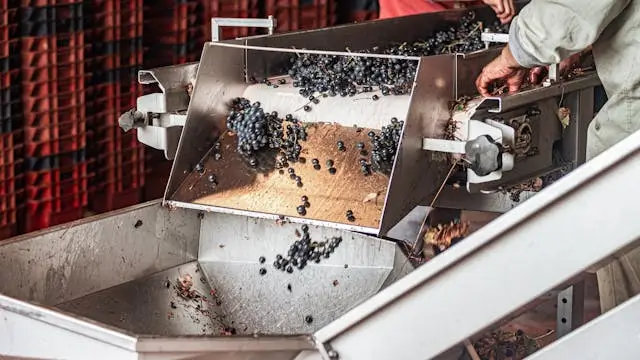
Verjuice is the pressed, unfermented juice of unripe wine grapes. In a normal vineyard year, winemakers do a late green harvest in July or early August — they drop clusters that will not ripen properly, to concentrate the remaining fruit. Those dropped clusters, historically, were left in the rows to compost. Our partner wineries, instead, collect them, wash them, press them cold, stabilise them lightly, and bottle them in small format.
What comes out is a juice with almost no sugar — maybe 8 to 10 percent, well below ripe-grape juice — and extremely high acidity, usually around pH 2.5 to 2.9. It tastes like green apple, cut grass, citric acid, and, depending on the grape, something slightly herbal. It is not a proto-wine. It does not ferment. It is a preserved moment — the fruit of a vintage, caught weeks before the pick, before it becomes itself.
Why we send it
Three reasons, in order of importance.
The first is that it tells you what your wine is made of, before the winemaker has made any choices about it. The acid profile of a finished Meursault Chardonnay, for example, is not something the winemaker invented. It came out of the fruit in August. If you tasted the verjuice, you tasted the acid. When the finished wine arrives in 2026, the acid will still be there, shaped by the ferment and the barrel and the time, but recognisable. You will know it because you tasted it two years earlier.
The second is that verjuice is an old kitchen ingredient that almost nobody sells at retail anymore. Medieval European cooks used it the way modern cooks use lemon juice. It is milder than vinegar, more structured than citrus. A spoonful in a pan sauce, a dash over a ripe tomato in August, half a cap in a martini instead of a wedge of lemon. We get notes from Crew members every fall about what they have done with their bottles. The best note of 2024 came from a chef in Osaka who had used hers to glaze a piece of raw mackerel.
Verjuice is the vintage before it is a wine. It is a photograph of the fruit on the day it was green.
The third is that it is a handshake. The bottle arrives in August. It is the first physical thing you get from your Crew. You open the cardboard tube. You read the handwritten tag. You taste the juice cold. Your winemaker, at that moment, is in the rows somewhere in Burgundy or Sonoma or Piedmont, probably eating a sandwich, probably worried about the forecast. The verjuice is the first time your year together becomes a thing you can hold.
How to drink it
Very cold. Over ice if you like. Straight from a small glass is the traditional method — the French call this a coup de verjus, which is one of those phrases that sounds better than it translates. A spoonful in sparkling water makes a good non-alcoholic aperitif, especially in summer. Most Crew members end up using about half the bottle straight and saving the other half for cooking. Store in the fridge after opening. It keeps about a month.
One thing not to do: do not save your verjuice to compare with the finished wine, side by side. That will not work. The wine is not the juice. It is the juice's distant relative after it has been to university and come home. You will find the acid if you are looking for it. You will not find it more easily by having both bottles on the table at once.
That is all. If you have a bottle of it in your fridge right now, pour yourself a spoonful. You are drinking a vintage before anyone knew what it would become. That is a rare thing. We try not to oversell it. But we also try not to hide what it is.
Written by
Split Vineyards
Published October 21, 2025